The Future of Web Accessibility: Beyond Screen Readers and Into AI Voice
Screen readers leave gaps for motor, cognitive, and low-vision users. AI voice platforms now fill those gaps at scale across accessibility systems.
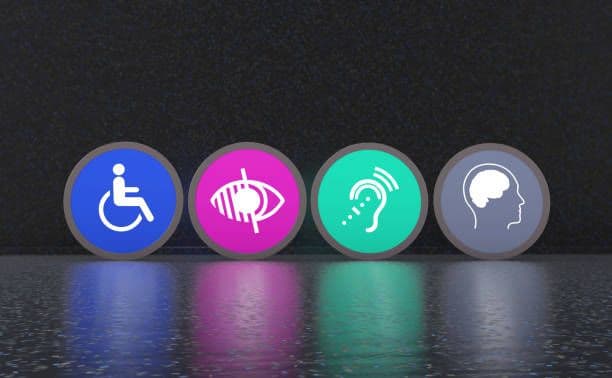
Web accessibility has expanded well beyond screen readers, which leave significant gaps for motor, cognitive, and low vision users.
An estimated 1.3 billion people globally live with disability, representing 16% of the world population.
AI voice technology now addresses those gaps through neural speech synthesis, intent recognition, and real-time conversational memory.
Platforms like Voiceitt, AudioEye, and ReadSpeaker are already deployed across major learning management systems. The full scope of this shift warrants closer examination.
Why Screen Readers Alone No Longer Cut It
Key gaps include:
- Keyboard Navigation failures trap users on sites where interactive elements remain unreachable via Tab key
- Low Vision Support requires sufficient color contrast and text resizing, independent of screen reader optimization
- Cognitive Accessibility demands clear language, logical layouts, and no unnecessary time pressures
- Color Independence ensures users with color vision deficiency receive information without color-coding reliance
- Semantic Structure benefits all assistive technologies, not exclusively screen readers
- Mobile Limitations remain severe — approximately 50% of mobile applications lack functional screen reader support entirely
Significant disability affects an estimated 1.3 billion people worldwide, representing 16% of the global population across a wide spectrum of auditory, motor, cognitive, and visual needs.
WCAG success criteria serve the full assistive technology spectrum, not one tool.
How AI Voice Technology Actually Works on the Web
Addressing keyboard navigation failures, low vision support, and cognitive accessibility gaps requires more than policy awareness — it requires understanding the tools now filling those gaps.
AI voice technology on the web operates through layered systems working in sequence:
AI voice technology on the web doesn't operate as a single tool — it functions as layered systems working in sequence.
- Neural speech synthesis converts text into natural-sounding audio using deep learning models trained on diverse speech datasets
- Intent entity extraction identifies user goals and specific data points — names, locations, times — from spoken input
- Conversational context memory retains prior exchanges, enabling coherent multi-turn interactions
- Real time turn taking uses voice activity detection to recognize when users begin speaking and respond without delay
Platforms like ElevenLabs power these pipelines.
Services such as TTS2Go integrate these capabilities directly into websites, removing the need for developers to build audio infrastructure independently.
At the core of these services, automatic speech recognition transcribes spoken language into text as the foundational step before any further processing can occur.
The AI Voice Tools Already Deployed Across Accessibility Platforms
Several AI voice tools have already moved past the experimental stage and now operate at scale across accessibility platforms in education, enterprise, and assistive technology.
Key deployments include:
- ReadSpeaker integrates directly with Canvas, Blackboard, and Moodle, enabling district-wide reading support
- Voiceitt uses adaptive AI to recognize non-standard speech patterns from users with ALS, cerebral palsy, and stroke
- AudioEye combines automation, expert audits, and disability community testing to meet WCAG and ADA standards
- Resemble AI, Speechify, and VideoSDK lead Multilingual Learning deployments with narrated courses and enrollment agents
- Voice Customization tools now allow tone, pitch, and pace adjustments to improve individual comprehension
These platforms confirm that AI voice accessibility has shifted from concept to operational infrastructure.
A single piece of content can now be voiced in dozens of languages without separate production teams, extending reach to global audiences across linguistic and cultural boundaries.
What Motor, Hearing, and Speech-Impaired Users Actually Need From Your Site
Most websites fail motor, hearing, and speech-impaired users at the structural level, not the cosmetic one. The gaps are functional, not aesthetic.
Motor-impaired users require keyboard-first workflows that provide complete access without a mouse.
Every button, button, form, and link must respond to tab and arrow key navigation. Accessible forms demand adequate spacing, clear focus indicators, and large interaction targets.
Hearing-impaired users need captioned media design and transcript support across all audio and video content.
Visual alerts must replace or supplement audio cues. Written instructions must accompany any voice-based guidance.
Core structural requirements include:
- Full keyboard operability across all site functions
- Accessible forms with proper spacing and labeling
- Captioned media design on every multimedia element
- Transcript support for audio and video content
- Visual indicators replacing audio-only notifications
Speech recognition software users, such as those relying on Dragon Naturally Speaking, depend on unique link labels so voice commands like "click here" do not match multiple controls simultaneously.
How to Make Your Website AI Voice-Ready Today
Adding AI voice to a website no longer requires a development team or a lengthy build cycle.
Platforms like Vapi, Retell AI, and AnveVoice, used across 4,200+ websites, reduce deployment to minutes through copy-paste embed codes.
Deploying AI voice to your website now takes minutes, not months—no development team required.
- Voice widget testing: Deploy sticky-positioned widgets and validate behavior across devices
- Multilingual readiness: Access 50+ supported languages through platforms like AnveVoice
- Latency optimization: Target sub-700ms response times for seamless user interaction
- Privacy compliance: Configure system prompts and business rules to meet data requirements
- No-code integration: Single-line implementation supports WordPress, Shopify, and React environments
Google AI Studio generates assistant prompts directly from a website URL. Free tiers offer 50,000 monthly tokens.
Functional voice accessibility is now a configuration decision, not an engineering project.
Why AI Voice Accessibility Is Also Good for Your Rankings
Once a website deploys AI voice through platforms like Vapi, Retell AI, or AnveVoice, the benefits extend well beyond user experience. Search engines reward measurable engagement signals, and AI voice consistently improves dwell time and reduces bounce rates.
Voice-friendly content also increases eligibility for featured snippet targeting.
Google's algorithms favor structured, clearly spoken content for AI Overviews, Perplexity citations, and direct answer placements.
Additional ranking benefits include:
- Local search visibility — Voice queries frequently carry local intent, improving placement across smart speakers and in-car assistants
- Keyword coverage expansion — Transcripts and alt text increase indexable content
- Core Web Vitals improvement — Cleaner code structure from accessibility implementation boosts page performance scores
AI voice adoption functions as both an accessibility upgrade and a measurable SEO asset.
As multilingual capabilities expand, AI voice tools can deliver real-time translations that make content accessible to broader global audiences across languages.
Conclusion
AI voice technology has moved from optional to essential in web accessibility strategy. Screen readers address a narrow user base. AI-driven audio tools serve motor-impaired, visually impaired, and situationally limited users simultaneously.
Platforms like TTS2Go.com demonstrate that deployment no longer requires deep engineering resources. Search engines reward accessible, voice-ready content.
The data points toward one direction: sites that integrate AI voice now will outperform those that treat accessibility as a future consideration.